kpac home
  • Home
  • Snowpack
    • Get The Forecast
    • Alerts Sign-up
    • Historic Snowpack Summary Archive
    • Observations
    • Submit Observation
    • Snowpack Data (snowpilot.org)
    • KPAC Backcountry Group
    • RAC Project
  • Weather
    • NWS Flagstaff Area Forecast Discussion
    • NWS Treeline Forecast (~11,500')
    • NWS Near Treeline Forecast (~10,900')
    • NWS Below Treeline Forecast (~10,000')
    • GFS Model Guidance
    • NBM Model Guidance
    • Precipitation Analysis
    • GOES (satellite) Image Viewer
    • AZ Snowbowl Top Patrol (ASBTP)
    • AZ Snowbowl Top of Grand Canyon Express Lift (AU373)
    • AZ Snowbowl Primary Pump House (ASBSB)
    • AZ Snowbowl Little Spruce Station (ASBLS)
    • Snowslide Canyon SNOTEL - 7 day summary
    • Snowslide Canyon SNOTEL - 72 hour summary
    • Snowslide Canyon SNOTEL - 72 hour time series viewer
    • Snowslide Canyon SNOTEL - current water year plot
    • SNOTEL - Station/Basin Status Map
    • Flagstaff Airport Station
    • Flagstaff Alert Data (JEFDAQ)
    • Holfuy Stations
    • Snowbowl Webcams
    • NAU Webcam
    • NWS Peaks Webcam
  • Education
    • KPAC Courses
    • Scholarship Information
    • Free Online Avalanche Awareness Course
    • Avalanche.org Avalanche Basics
    • Rescue at Cherry Bowl
    • Avalanche at Tunnel Creek
    • Snow Avalanches on the San Francisco Peaks
    • Avalanches in Arizona?
    • Avalanche Awareness in the Kachina Peaks Wilderness (youtube)
    • Know Before You Go (kbyg.org)
  • Resources
    • Snow, Weather, and Avalanches observational Guidelines (SWAG)
    • Maps
    • Forest Roads Status (fs.usda.gov)
    • ADOT Travel Alerts (az511.com)
    • KPAC Logos
  • About
    • Mission
    • Donate/Sponsor
    • Newsletter
    • Team
    • Contact
    • Bylaws

Snowpack Summary for Friday, March 4, 2022 1:14 PM Avalanche hazard expected to increase as winter returns

This summary expired Mar. 06, 2022 1:14 PM

Flagstaff, Arizona - Backcountry of The San Francisco Peaks and Kachina Peaks Wilderness

Disclaimer

Format and Limitations Statement

Newsletter

Overall After a period of warm temperatures and stabilization, avalanche hazard is expected to increase this weekend. Natural avalanches are unlikely, while human triggered avalanches will be possible. Windslab is the primary concern, with persistent slab being a second source of possible instability. Depending on precipitation amounts and wind loading, avalanches capable of burying multiple individuals could be possible. Avoid wind loaded slopes, assess conditions and travel one at a time.
Eleven to 24” of snow is expected to fall on the San Francisco Peaks beginning this evening. Snow will be accompanied by high winds. Above treeline, expect both wind scouring and deposition. Pockets of windslab are expected to occur along ridgelines, and at the top and sides of gullies. With winds shifting directions from the southwest to the northwest this problem could become widespread. On north and east facing slopes, newly loaded snow could trigger avalanches on buried near surface facets lying below mid-February snow. These avalanches could be larger in size.
Thin snowpack conditions are present on southeast through southwest slopes. Travel in these areas will require caution as new snow will be lying directly on mostly rock and dirt, and thus recreationists should be cautious of obstacles buried just beneath the new snow.
After last week's storm shooting cracks and propagating snow tests were observed.
Snowpit data may be found at snowpit.org.
Near and Above Treeline (~10,800' and above)Conditions near and above treeline are highly variable. Recreationists should avoid areas of wind loading and watch for shooting cracks--a sure sign that these wind loaded slopes are unstable.
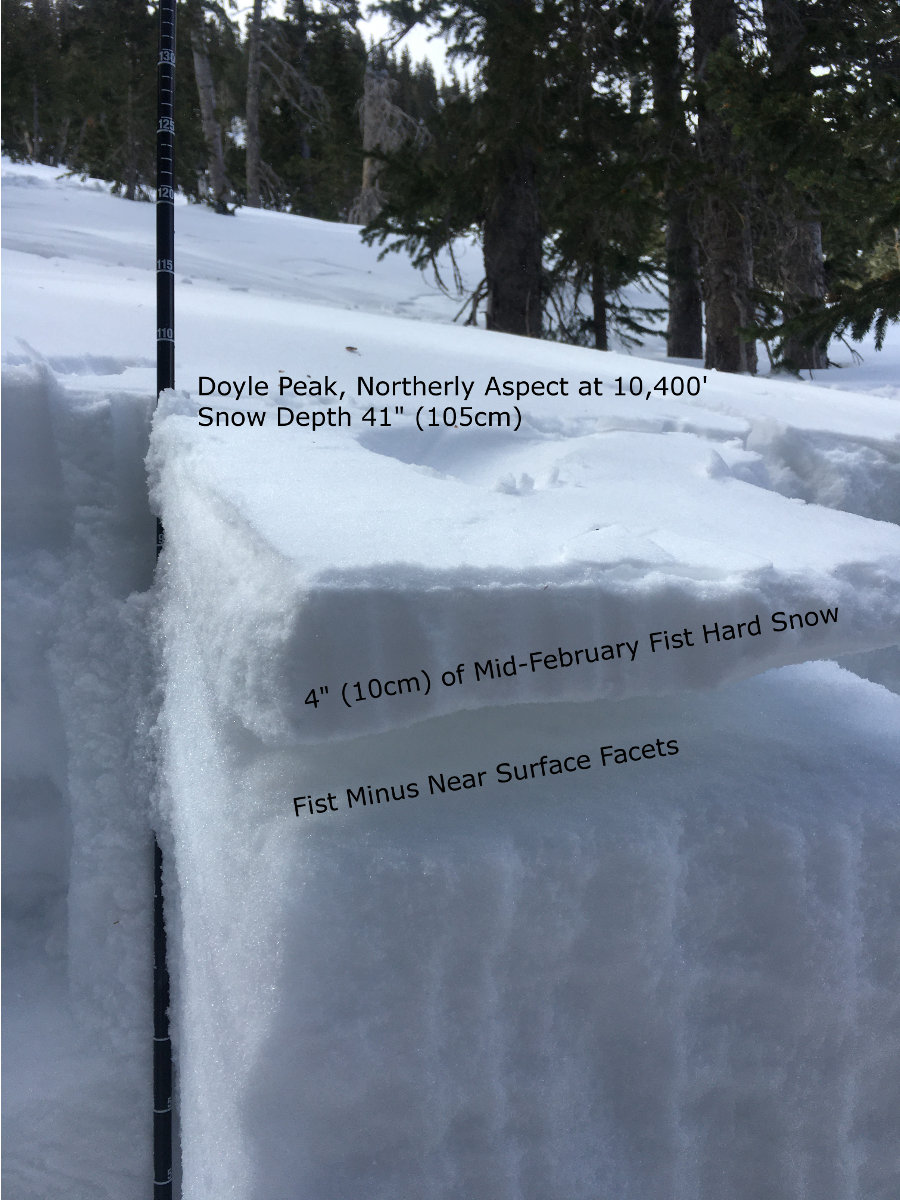
Facets on steep north through east facing slopes between roughly 10,400' and 11,500' may be reinvigorated by snow loading from this coming storm. Specifically, a layer of facets has developed under approximately 4" of mid-February snow. In some areas these facets may be associated with a melt-freeze crust. This weak layer poses a concern for persistent slab avalanche releases. Recreationists are encouraged to examine snowpack structure and test for signs of instability. In a few locations weak basal facets have been found, but these are not thought to be widely distributed. Be aware of their possible presence on cold north facing slopes. Failure at this layer may result in avalanches propagating at the very bottom of the snowpack.
Above treeline slopes are likely to be either windloaded or wind scoured, and some snowy areas may be strewn with wind deposited cinders. In other locations snow may be obscuring shallowly buried obstacles. Cautious travel is advised through this myriad of hazard types.
Below Treeline (~below 10,800')Below treeline both windslab and persistent slab could be still be present. Although trees provide protection, windslabs, particularly at rollovers and in small steep clearings, are possible. The persistent slab problem has been observed as low as 10,400' and cold northly aspects should still be treated with suspicion.
New snow will hide rocks and logs on southern, western and possibly east aspects. Cautious travel is recommended. On north aspects more snow should provide adequate travel opportunities down to approximately 8,500 feet.

Current Problems (noninclusive) more info

Wind Slab
problem 1
Watch for newly formed wind slabs on leeward slopes and cross-loaded terrain features. Observe for shooting cracks and the feel of hollow snow while contouring slopes and traversing ridgelines.
Persistent Slab
problem 2
Persistent slab problems on northly, northeasterly and easterly slopes between 10,400' and 11,500' may be activated by wind or new snow loading. Facets lurking below the mid-February layer are of concern in these areas. (See image below.)

There may also be a crust associated with this persistent problem.

Images
image

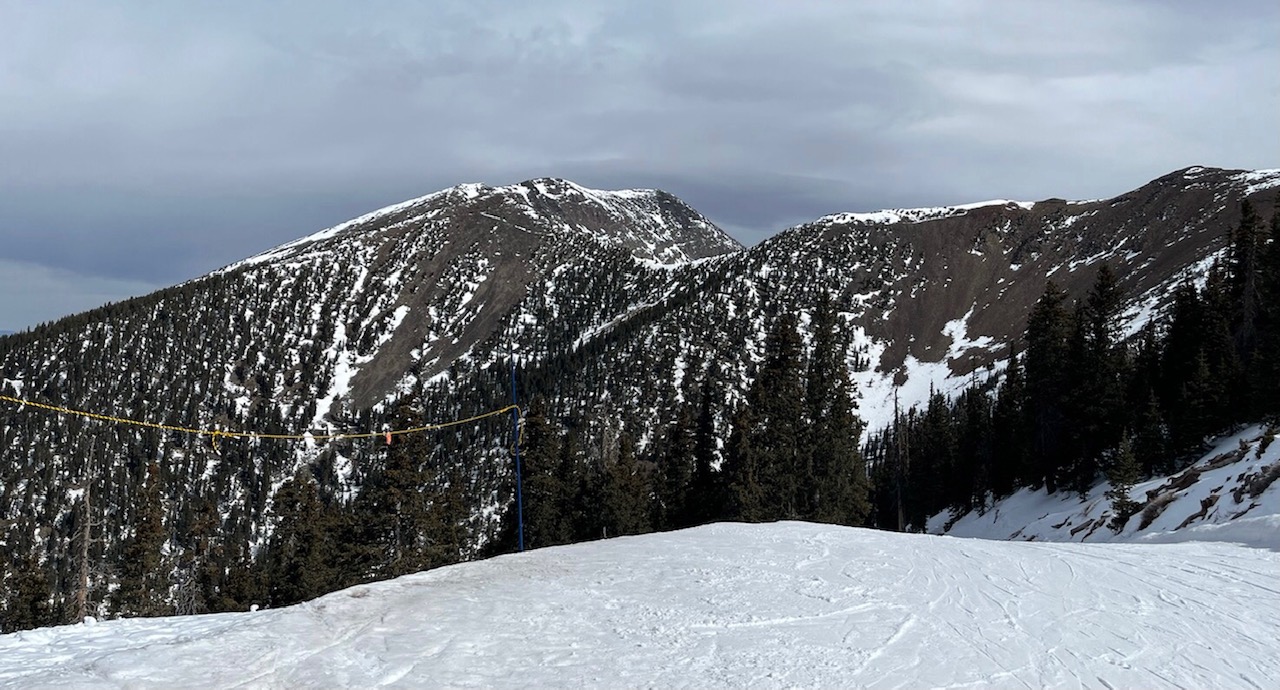
Pre-storm conditions on the south side of Mt. Humpreys. March 3, 2022. Photo courtesy of Derek Spice.
expand image
image

Mid-February snow overlaying weak near surface facets on Doyle peak. February 21, 2002. Photo by Troy Marino.

expand image

Final Thoughts

Always carry the 10 essentials and avalanche rescue gear for wintertime wilderness travel. Submit your observations here.
For AZ Snowbowl uphill access updates please refer to snowbowl.ski and flagstaffuphill.com. The Kachina Peaks wilderness is accessible from the lower parking lots at Snowbowl.

Weather

Updated Friday March 4
Beautiful springtime weather, with above average high temperatures characterized last week. On Wednesday March 2 , the maximum temperature reached 51° F and the nighttime low barely dropped below freezing, even at 11,500 feet.
Friday March 4 will bring a return to winter, as a series of energetic Pacific short wave troughs cruise across northern Arizona. These will introduce a windy cool-down and good chances of significant snowfall. The snow-line will start out at around 6500’ and drop to 4500’ by the end of the weekend. Snow and blowing snow are predicted, with 11 to 24 inches possible near treeline on the Peaks. Wind speeds will be in the ideal range for transporting snow, with velocities in the 20s and 30s, and gusting to 40s and 50s mph. Initially prevailing winds will be southwesterly, but then shift to northwesterly on Tuesday March 8 as the last of the storms exits the area. Looking onward, more settled and gradually warming weather should arrive by mid workweek.
Snowslide SNOTEL reports 43” (109 cm) of snow at 9,730'. So far this winter, we have had a total of 119” (302 cm) of snowfall at 10,800' with a 54" (138 cm) undisturbed settled base depth. This puts us at 50% of average annual snowfall, based the last 30 years of records. Since February 25, Snowslide SNOTEL low temperatures have ranged between -1°F on February 26 and 29° F on March 3, while highs have ranged from 33°F on February 26 to 55° F on March 2. For the same time period, ASTP station (11,555') reports a low of -2°F on February 24 and a high of 52.7°F on March 2.
Weather Links

Authored/Edited By: Mathieu Brown

Avalanche Problems/Characters

The avalanche problem/character describes part of the current avalanche danger. However because we only realease a summary once a week, the current avalanche problem will likely change. Understanding avalanche problems is essential, because it allows you to determine your approach and strategies to risk treatment. Below are brief descriptions of avalanche problems/characters, and links to detailed information on the problem, formation, patterns, recognition, and avoidance strategies.
Avalanche Problems Explained
Also see the North American Danger Scale.

Loose Dry

Loose Dry

Release of dry unconsolidated snow. These avalanches typically occur within layers of soft snow near the surface of the snowpack. Loose-dry avalanches start at a point and entrain snow as they move downhill, forming a fan-shaped avalanche. Other names for loose-dry avalanches include point-release avalanches or sluffs. Loose-dry avalanches can trigger slab avalanches that break into deeper snow layers.

Loose Dry avalanches are usually relatively harmless to people. They can be hazardous if you are caught and carried into or over a terrain trap (e.g. gully, rocks, dense timber, cliff, crevasse) or down a long slope. Avoid traveling in or above terrain traps when Loose Dry avalanches are likely. more info

Storm Slab
Storm Slab

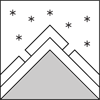
Release of a soft cohesive layer (a slab) of new snow that breaks within the storm snow or on the old snow surface. Storm-slab problems typically last between a few hours and few days. Storm-slabs that form over a persistent weak layer (surface hoar, depth hoar, or near-surface facets) may be termed Persistent Slabs or may develop into Persistent Slabs.

You can reduce your risk from Storm Slabs by waiting a day or two after a storm before venturing into steep terrain. Storm slabs are most dangerous on slopes with terrain traps, such as timber, gullies, over cliffs, or terrain features that make it difficult for a rider to escape off the side. more info

Wind Slab

Wind Slab

Release of a cohesive layer of snow (a slab) formed by the wind. Wind typically transports snow from the upwind sides of terrain features and deposits snow on the downwind side. Wind slabs are often smooth and rounded and sometimes sound hollow, and can range from soft to hard. Wind slabs that form over a persistent weak layer (surface hoar, depth hoar, or near-surface facets) may be termed Persistent Slabs or may develop into Persistent Slabs.

Wind Slabs form in specific areas, and are confined to lee and cross-loaded terrain features. They can be avoided by sticking to sheltered or wind-scoured areas. more info

Persistent Slab

Persistent Slab

Release of a cohesive layer of soft to hard snow (a slab) in the middle to upper snowpack, when the bond to an underlying persistent weak layer breaks. Persistent layers include: surface hoar, depth hoar, near-surface facets, or faceted snow. Persistent weak layers can continue to produce avalanches for days, weeks or even months, making them especially dangerous and tricky. As additional snow and wind events build a thicker slab on top of the persistent weak layer, this avalanche problem may develop into a Deep Persistent Slab.

The best ways to manage the risk from Persistent Slabs is to make conservative terrain choices. They can be triggered by light loads and weeks after the last storm. The slabs often propagate in surprising and unpredictable ways. This makes this problem difficult to predict and manage and requires a wide safety buffer to handle the uncertainty. more info

Deep Persistent Slab

Deep Persistent Slab

Release of a thick cohesive layer of hard snow (a slab), when the bond breaks between the slab and an underlying persistent weak layer, deep in the snowpack or near the ground. The most common persistent weak layers involved in deep, persistent slabs are depth hoar or facets surrounding a deeply buried crust. Deep Persistent Slabs are typically hard to trigger, are very destructive and dangerous due to the large mass of snow involved, and can persist for months once developed. They are often triggered from areas where the snow is shallow and weak, and are particularly difficult to forecast for and manage. They commonly develop when Persistent Slabs become more deeply buried over time.

Deep Persistent Slabs are destructive and deadly events that can take months to stabilize. You can trigger them from well down in the avalanche path, and after dozens of tracks have crossed the slope. more info

Loose Wet

Loose Wet

Release of wet unconsolidated snow or slush. These avalanches typically occur within layers of wet snow near the surface of the snowpack, but they may quickly gouge into lower snowpack layers. Like Loose Dry Avalanches, they start at a point and entrain snow as they move downhill, forming a fan-shaped avalanche. They generally move slowly, but can contain enough mass to cause significant damage to trees, cars or buildings. Other names for loose-wet avalanches include point-release avalanches or sluffs. Loose Wet avalanches can trigger slab avalanches that break into deeper snow layers.

Travel when the snow surface is colder and stronger. Plan your trips to avoid crossing on or under very steep slopes in the afternoon. Move to colder, shadier slopes once the snow surface turns slushly. Avoid steep, sunlit slopes above terrain traps, cliffs areas and long sustained steep pitches. more info

Wet Slab

Wet Slab

Release of a cohesive layer of snow (a slab) that is generally moist or wet when the flow of liquid water weakens the bond between the slab and the surface below (snow or ground). They often occur during prolonged warming events and/or rain-on-snow events. Wet Slabs can be very destructive.

Avoid terrain where and when you suspect Wet Slab avalanche activity. Give yourself a wide safety buffer to handle the uncertainty. more info

Cornice Fall

Cornice Fall

Cornice Fall is the release of an overhanging mass of snow that forms as the wind moves snow over a sharp terrain feature, such as a ridge, and deposits snow on the downwind (leeward) side. Cornices range in size from small wind lips of soft snow to large overhangs of hard snow that are 30 feet (10 meters) or taller. They can break off the terrain suddenly and pull back onto the ridge top and catch people by surprise even on the flat ground above the slope. Even small cornices can have enough mass to be destructive and deadly. Cornice Fall can entrain loose surface snow or trigger slab avalanches.

Cornices can never be trusted and avoiding them is necessary for safe backcountry travel. Stay well back from ridge line areas with cornices. They often overhang the ridge edge can be triggered remotely. Avoid areas underneath cornices. Even small Cornice Fall can trigger a larger avalanche and large Cornice Fall can easily crush a human. Periods of significant temperature warm-up are times to be particularly aware.

Large cornices are generally rare in Arizona, but they have been observed during very snowy winters. more info

Glide
Glide

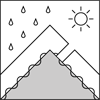
Release of the entire snow cover as a result of gliding over the ground. Glide avalanches can be composed of wet, moist, or almost entirely dry snow. They typically occur in very specific paths, where the slope is steep enough and the ground surface is relatively smooth. The are often proceeded by full depth cracks (glide cracks), though the time between the appearance of a crack and an avalanche can vary between seconds and months. Glide avalanches are unlikely to be triggered by a person, are nearly impossible to forecast, and thus pose a hazard that is extremely difficult to manage.

Predicting the release of Glide Avalanches is very challenging. Because Glide Avalanches only occur on very specific slopes, safe travel relies on identifying and avoiding those slopes. Glide cracks are a significant indicator, as are recent Glide Avalanches.

Glide avalanches are very uncommon in Arizona. more info
Snowpack Summary Disclaimer

The summaries on this site were written by Kachina Peaks Avalanche Center Board Members. They are based on a broad spectrum of data collected from weather stations, National Weather Service point forecasts and field observation by qualified individuals.

The summaries are not intended to substitute for good knowledge and decision making skills in avalanche terrain. If you have any doubt of stable conditions, please stay away from avalanche terrain. You can usually find good places to go that are not prone to avalanches, such as on low angle slopes away from avalanche run-out zones. If you have any questions about where to find such places, you should consider further avalanche educational opportunities, such as those listed on our education page.

Snowpack Summary – Format and Limitations Statement

Starting in 2012 Kachina Peaks Avalanche Center (KPAC) has publish a weekly Snowpack Summary on our website. These summaries are currently issued on Friday afternoons. On occasion, we will give storm updates or warnings of rapidly increasing avalanche hazard at more frequent intervals. Our objective is to reach weekend recreationist, informing this user group of prevailing conditions, but particularly warning of avalanche hazards whenever they are present. Many people have asked us why we use the format we do, but do not include a danger rating or a hazard/stability rose as many other avalanche centers do around the west.

The National Avalanche Center (NAC) advises small operations like KPAC, who do not issue daily bulletins to not use danger ratings in our snowpack summaries due to the regular but intermittent nature of their field observations and the length of time between issuance of snowpack summaries. A primary concern is for how conditions can change in the time between publications, potentially giving the public misleading information. At this point, we simply do not have resources to monitor the snowpack at the level necessary to accurately produce more frequent bulletins. While we understand the benefits of a danger rating using the North American Danger Scale, we also feel that our format encourages people to dig in a little deeper, and spend some time reading what our forecasters are saying. Although the area that we forecast is relatively small, the variability has proven quite large. Inner Basin conditions are often surprisingly different from those on the more wind-affected western side on the Peaks.

We hope the information that we provide in summaries helps give you a good overview of what is going on out there, and what avalanche problems you should be attentive to, but if there is any uncertainty, then we encourage you to ask questions via Facebook or info@kachinapeaks.org.

Submit an Observation

sponsors

facebook/kachinapeaksavy

instagram/kachinapeaksavy
  • Home
  • Get The Forecast
  • Submit Observation
  • Courses
  • Alerts
  • Newsletter
  • Mission
  • Donate/Sponsor
  • Contact

KPAC is authorized to operate on the Coconino National Forest under a Special Use Permit

© 2025 Kachina Peaks Avalanche Center - KPAC